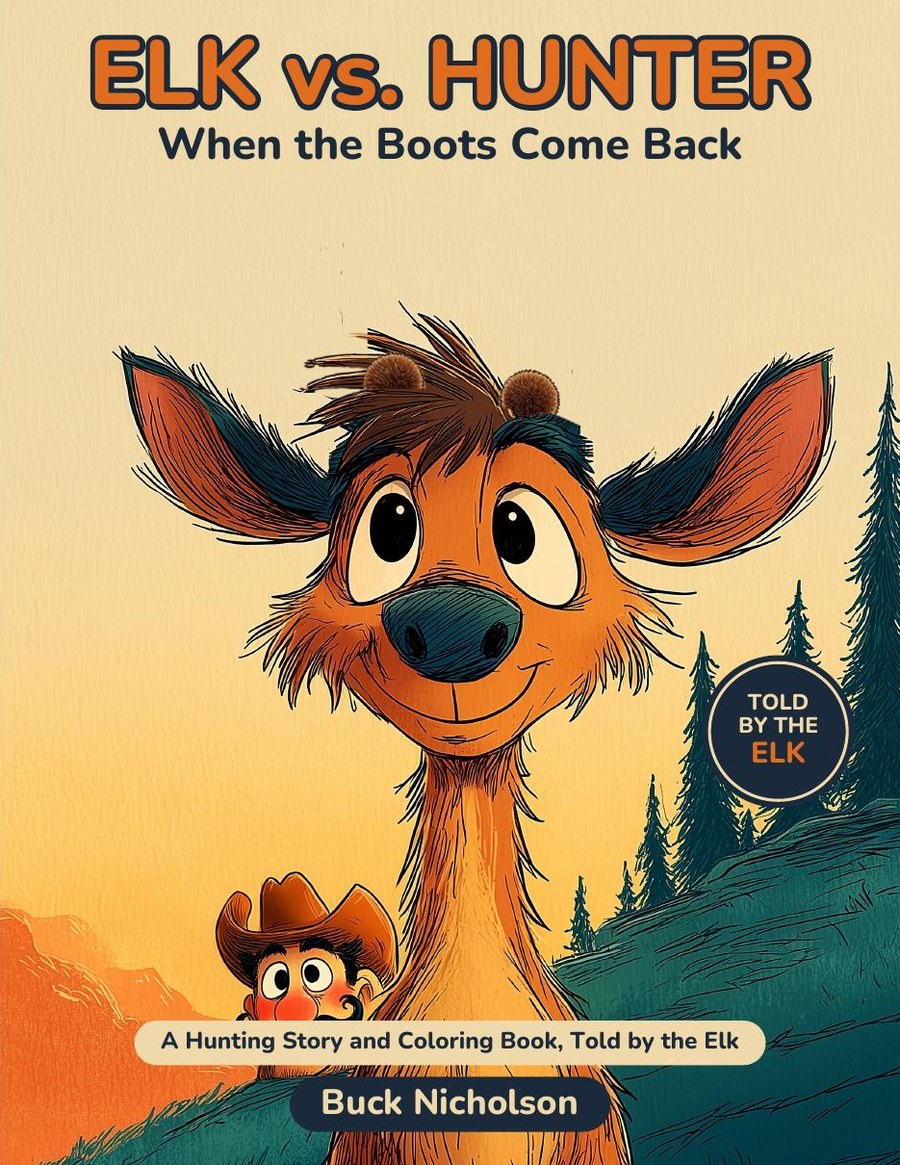
Book 1 · Told by the elk
Elk vs. Hunter: When the Boots Come Back
Whose world is it? A hunting trip, told by the herd that has watched hunters for years. To us it is the wilderness. To the elk it is home.
Told by the elk
What elk know about hunters, flipped around so a young hunter can use it this season. From the book Elk vs. Hunter.
Updated October 24, 2026
Short answer: elk avoid hunters by smelling them on the wind, bedding where hunters do not look, drinking at water that is not on the map, reading every call, letting the cows watch for movement, moving away from hunting pressure, and waiting for the one moment a hunter stands up. These are the seven elk rules in Elk vs. Hunter: When the Boots Come Back, a hunting story and coloring book for young hunters 7 and up, told by the elk.
Each rule below is the elk's side first, then what a young hunter should actually do. Read one with a kid, color the matching scene, then go try it outside.
Old Rack's first rule: the wind tells an elk everything, and the hunter forgets it every single time.
Elk eat in one place and sleep in another, and a hunter who mixes them up spends the day in the wrong spot.
The pond on the map is the pond every hunter knows, and the elk know that too.
A bull who hears a bugle has to go look. An old bull does not answer. He circles to get the wind and checks from the side whether it is a real bull or a hunter with a tube.
Hunters stare at the bull. The cows are the ones staring at the hunter, and the lead cow decides when the herd leaves.
Opening weekend fills the trailheads, and the elk go somewhere steep and ugly that hunters do not want to walk into.
The hunter in the last chapter does almost everything right, and then stands up for one second to look.
Mostly by smell. Elk keep their noses into the wind, and morning air flows downhill while midday air rises, so a hunter on the wrong side of the wind is smelled long before he is seen. Cow elk also spot movement from far away.
Elk usually feed in open meadows at night and at first light, then move into thick timber on shady slopes to bed by mid-morning. They come back out to feed in the evening.
A cow elk barks when she is sure she sees danger. It is an alarm that tells the whole herd to leave.
Away from roads and trailheads, into steep, roadless country at least a mile from a trail, or onto private land where they are not hunted.
Elk vs. Hunter: When the Boots Come Back by Buck Nicholson teaches these seven elk rules through a story told by a young elk named Sprig, with 17 coloring scenes and seven Hunter's Field Notes. It is for young hunters 7 and up and is sold on Amazon.
Told By · See the world through other eyes
A story, a coloring book and a hidden-picture hunt, told from the other side. Start with the first two. Why we make these
Whose world is it? A hunting trip, told by the herd that has watched hunters for years. To us it is the wilderness. To the elk it is home.
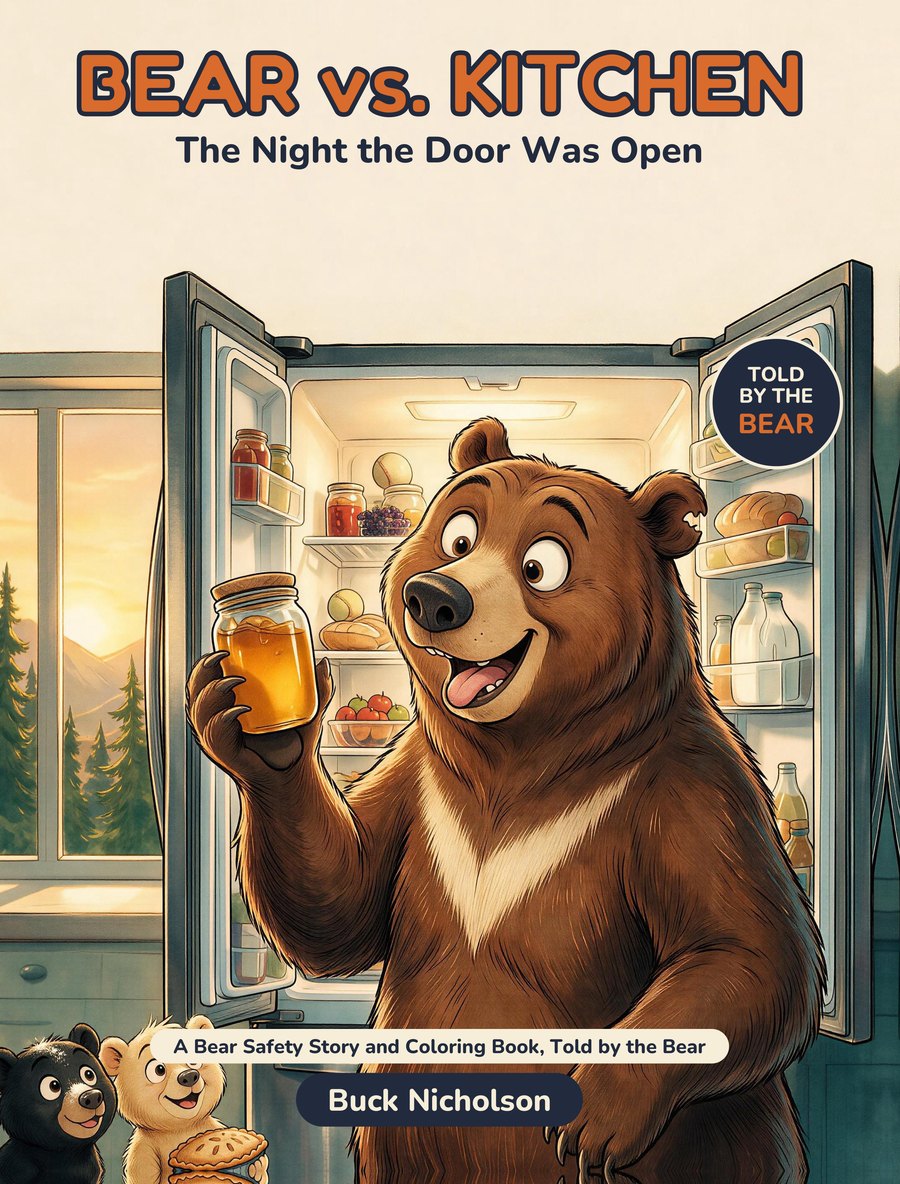
Who else lives here? A family's kitchen, seen by a mother black bear. What we call a house, a bear calls an open door.
After that, readers help pick who tells the next story. Every animal sees our world differently.